

Africa is developing; the continent is seeing an increase in ports, highways, storage facilities, and energy infrastructure. But something fundamental is lacking. While the physical footprint grows, the digital layer remains thin, fragmented, or entirely absent.
At Maven Dynamics, we operate where concrete meets code — and we’ve learned that strength alone isn’t enough. Infrastructure today must be smart: monitored, measurable, and digitally optimized.
Because in reality, infrastructure failure isn’t always about cracks or corrosion. It’s about what the system can’t see.
The Unseen Weakness in Our Hard Assets
Governments and investors often think in megawatts and megatons — how much power, how much fuel, how much steel.
But we see the other side:
- Data on discharges written in notebooks
- Tank levels verified by dipstick readings
- Flow reconciliation done after the fact, if at all
- Clients disputing volumes because there’s no tamper-proof audit trail
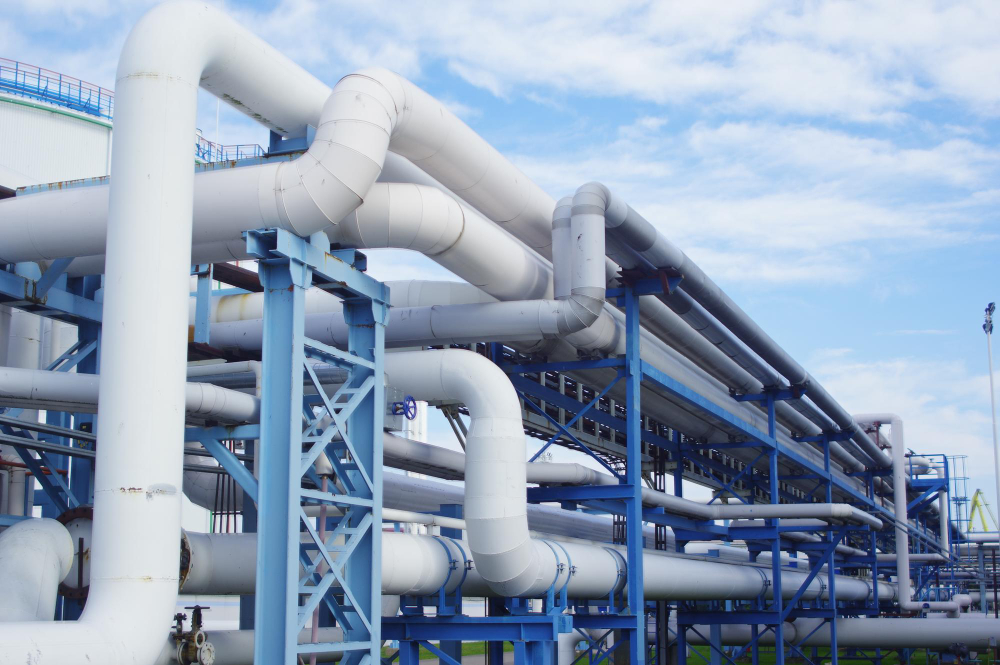
In many cases, a jetty handling millions of liters per month has no live dashboard, no SCADA system, no digital flowmeter integration — yet it’s expected to deliver performance and transparency.
This gap between physical capacity and operational intelligence creates exposure — not just to errors, but to losses, delays, and reputational risk.
Case in Point: Manual Dipstick Readings
At many tank farms and depots across Ghana and West Africa, dipstick measurement remains the primary method of confirming volumes received or discharged.
It’s familiar and simple — but dangerously imprecise:
- A 1–2 cm misreading on a large tank can equal thousands of liters in discrepancy.
- Wind, lighting, and even operator fatigue can distort readings.
- Reconciliation happens manually, sometimes days after the transaction.
- Clients bring their own dipsticks to verify — not because they trust the system, but because they don’t.
These practices persist not because there are no alternatives, but because digital systems haven’t been fully integrated — or built for the operational realities on the ground.
Smart Infrastructure: Built for Context
“Smart” doesn’t mean importing dashboards from Europe or control systems from the Gulf. It means engineering platforms that match the operational rhythm of African infrastructure.
At Maven Dynamics, we design digital layers that:
- Integrate with existing depot infrastructure
- Capture data at the loading arm, pipeline, and manifold
- Offer real-time dashboards for flow, volume, tank levels, and asset uptime
- Provide secure audit trails to reduce disputes and improve billing accuracy
- Work both online and offline to adapt to power and network variability
We’re also developing modules that tie these systems into ERP platforms, giving operators a clear view from transaction to reporting without having to fill in the gaps manually.
Pipelines Are Not Enough. You Need Platforms.
A modern oil jetty or municipal infrastructure project is no longer just a physical asset — it’s part of a data environment.
Donors and clients are demanding:
- More real-time performance data
- More transparency in financial and operational flows
- More resilience in system uptime and reporting
And the only way to meet those expectations is to embed intelligence directly into the infrastructure from day one — or retrofit it with platforms that make smart operations possible.
Why Maven Dynamics Is Leading This Shift
At Maven Dynamics, we were never just builders. We are system engineers, integration architects, and digital operators.
- We modernize jetties not just with better pipes but with smart metering and digital reconciliation.
- We deliver local government revenue systems that don’t just collect money but provide full traceability from POS to treasury.
- We build platforms for funds that don’t just disburse but monitor utilization and performance in real time.
In short: we build systems that understand where they are, who they serve, and why they must evolve.
Because Africa doesn’t just need to build more. It needs to build better, with intelligence embedded.
Want to see how Maven Dynamics is transforming infrastructure into intelligent systems?
Let’s talk about your project.